- How a monocrystalline solar panel is made
- What a monocrystalline solar panel nameplate does not say
- How to compare one monocrystalline solar panel with another
- Frequently asked questions
- Is a monocrystalline solar panel the same as a polycrystalline one?
- Are monocrystalline solar panels always the most efficient?
- Do monocrystalline solar panels work on cloudy days?
- Sources and references
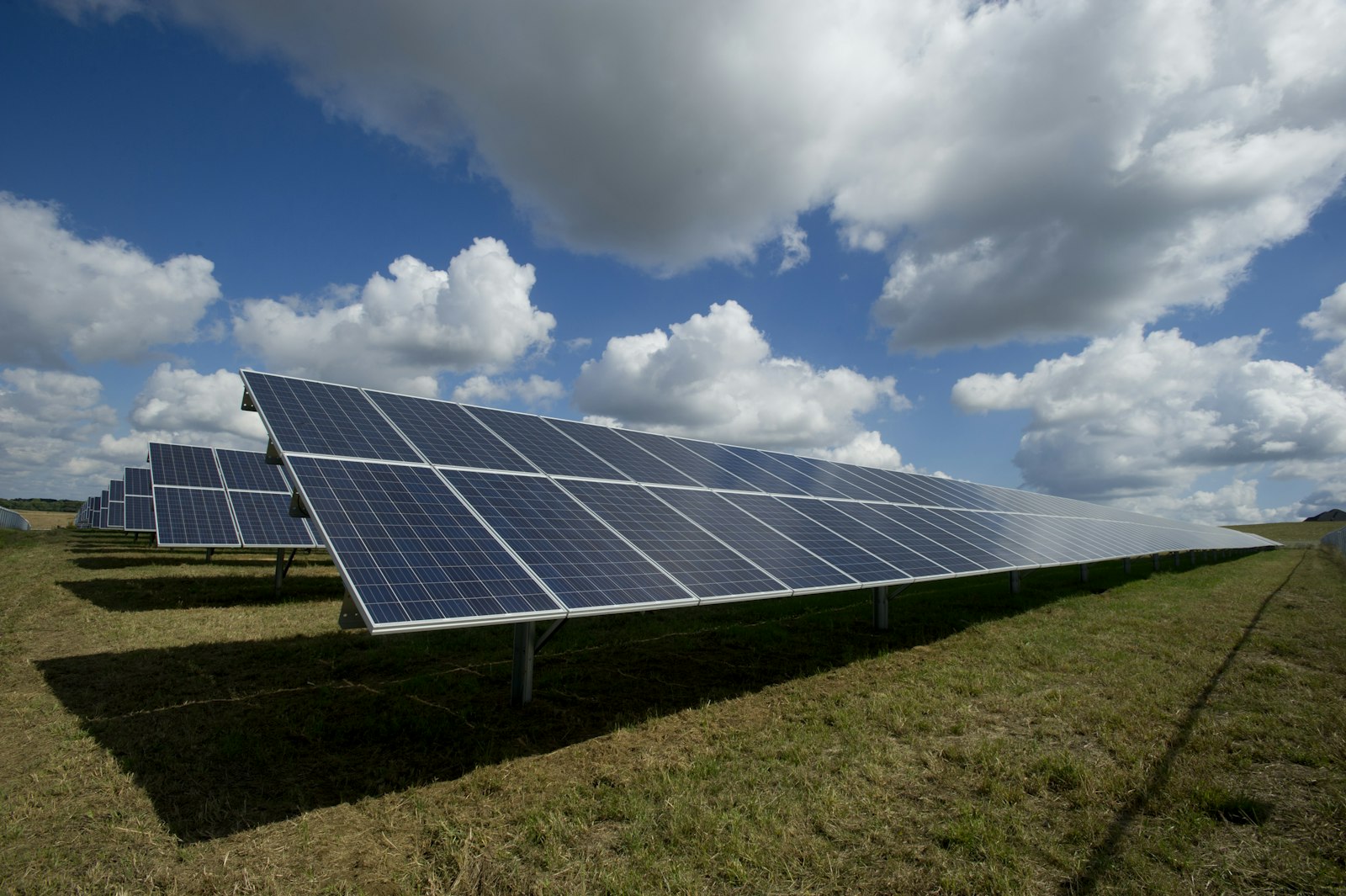
A monocrystalline solar panel is a module built from cells that each come from one silicon crystal. The US Energy Information Administration’s glossary describes single-crystal silicon as an extremely pure crystalline silicon made by dipping a seed crystal into molten silicon and slowly withdrawing a solidifying boule. The boule is sawed into wafers and those wafers are made into cells. The Department of Energy’s account of the same Czochralski process adds the factory sequence: a seed is dipped into molten polysilicon and pulled so the solid that grows on the seed is one crystal, round in section. Wafers cut from it may be trimmed toward a rectangle so more of the module area is cell rather than gap.
Polycrystalline, or multicrystalline, silicon is the other wafer route in that same family. The Department of Energy’s solar glossary defines it as material made of many crystals, unlike single-crystal silicon. Both are crystalline silicon. Thin-film modules, which deposit a semiconductor instead of slicing an ingot, are the other commercial family and are not monocrystalline. That split is in what thin-film solar panels are.
How a monocrystalline solar panel is made
The feedstock is polysilicon that has been purified because contaminants change the electrical behavior. The Department of Energy notes that solar-grade material has to be very pure, and that growing the single crystal is the expensive step relative to casting many crystals at once. Wire saws replaced older one-wafer-at-a-time saws because they cut thinner wafers, waste less silicon as kerf, and slice many wafers at once. That is a manufacturing history, not a claim that every modern wafer is a particular thickness. Thickness is a datasheet and a process choice.
The cell is not finished when the wafer is cut. It is processed into a diode, contacted with metal, and laminated into a module with glass, encapsulant, and a frame or a backsheet. The module’s watts are the flash result of that laminate at standard test conditions, not the reputation of the crystal. Xcel Energy’s 2023 requirements for the crystalline modules that utility buys, including monocrystalline PERC, TOPCon, and heterojunction products, insist on the nominal power under standard test conditions, the temperature coefficients, and a factory flash test. A monocrystalline label without those lines is not a specification.
Heterojunction cells also use a crystalline silicon wafer, with additional layers. They are a specific architecture, not a synonym for monocrystalline. The architecture is explained in what heterojunction solar is. PERC is another architecture on a wafer, usually discussed as p-type mono, and it has its own page: what a PERC solar cell is. Buying “mono” does not tell you which of those you got.
What a monocrystalline solar panel nameplate does not say
It does not say the module will produce nameplate watts on a roof at noon. Standard test conditions are a laboratory irradiance and a cell temperature of the test, not the temperature of a dark roof in July. Output moves with the temperature coefficient printed for that module. Two monocrystalline modules can have different coefficients. Copying one onto the other is how a yield estimate goes wrong. The reading is in how heat affects a solar module.
It does not say the module is immune to shade. Cells in series still share one current. A vent shadow on one monocrystalline module pulls the string unless something electrical breaks that string into smaller pieces. NREL’s 2016 update of module-level electronics found annual recovery of shading losses around 25 to 35 percent of the loss for the products evaluated, and the larger difference between trials was how many strings were paralleled. The crystal structure did not grant that recovery. The electronics and the wiring did.
It does not say the module is bifacial. A monocrystalline wafer can be built as a one-sided module or as a bifacial module. For a one-sided module, ground-reflected light is typically only about 1 to 2 percent of the irradiance, so the ground barely matters. For a bifacial module the rear is the product, and albedo, height, and row spacing decide the gain. A NREL single-axis tracker validation reported about 6.5 percent annual bifacial energy gain for PERC and about 9 percent for silicon heterojunction on that array. Those figures are that validation. They are not a monocrystalline bonus. The rear-side article is bifacial solar panels.
How to compare one monocrystalline solar panel with another
Compare the flash power and the power tolerance, the temperature coefficients, the maximum system voltage, the mechanical load, and the warranty PDF. Ignore a naked efficiency slogan. A research-cell record is a small device. The Department of Energy’s process description does not assign a module efficiency to every Czochralski wafer, and this article will not invent one. If two quotes give you two monocrystalline modules, the one with the higher nameplate is not automatically the better roof. The roof’s tilt, shade, and temperature decide the kilowatt-hours. The module decides the watts available before those losses.
Warranty years are still a contract. Field practice described by Pacific Northwest National Laboratory is that panel warranties are often 10 years and sometimes 25. A specification can require 10 years of product coverage and 80 percent of nameplate for 25 years. Your PDF can say something else. Read it, including whether labor on the roof is included. Serial numbers and the pallet flash file are what a claim needs later.
Frequently asked questions
Is a monocrystalline solar panel the same as a polycrystalline one?
No. Monocrystalline cells are cut from one crystal. Polycrystalline cells are cast with many crystals. Both are wafer silicon. The EIA and Department of Energy definitions turn on that crystal count, not on a color or a brand.
Are monocrystalline solar panels always the most efficient?
They are a high-performing wafer family, and the single crystal is why the process exists. The number that matters for a purchase is the module’s own flash test, not a category ranking. Heterojunction, PERC, and other cell designs can all be built on monocrystalline wafers and still differ.
Do monocrystalline solar panels work on cloudy days?
They work on the light that arrives, which on a cloudy day is mostly diffuse. Output falls because the beam is gone. There is no single cloudy-day percentage for the category. The distinction between cloud and shade is in solar panels on a cloudy day.
Sources and references
Single-crystal silicon and the seed-and-boule description: US Energy Information Administration glossary. Czochralski pulling, trimming, and the crystalline-versus-thin-film split: US Department of Energy retrospective. Polycrystalline as many crystals: DOE solar glossary (archived). What a crystalline-module datasheet is asked to contain, under one utility’s 2023 rules: Xcel Energy. Bifacial gains on one tracker validation, and the 1 to 2 percent ground-reflected share for one-sided modules: NREL field slides and NREL albedo primer.
