- What a PERC solar cell changes
- What a PERC solar cell record is not
- Light-induced degradation in a PERC solar cell
- Frequently asked questions
- Is every monocrystalline panel a PERC solar cell?
- Does a PERC solar cell guarantee 22 percent module efficiency?
- Is the 25 percent PERC figure a panel you can buy?
- Sources and references
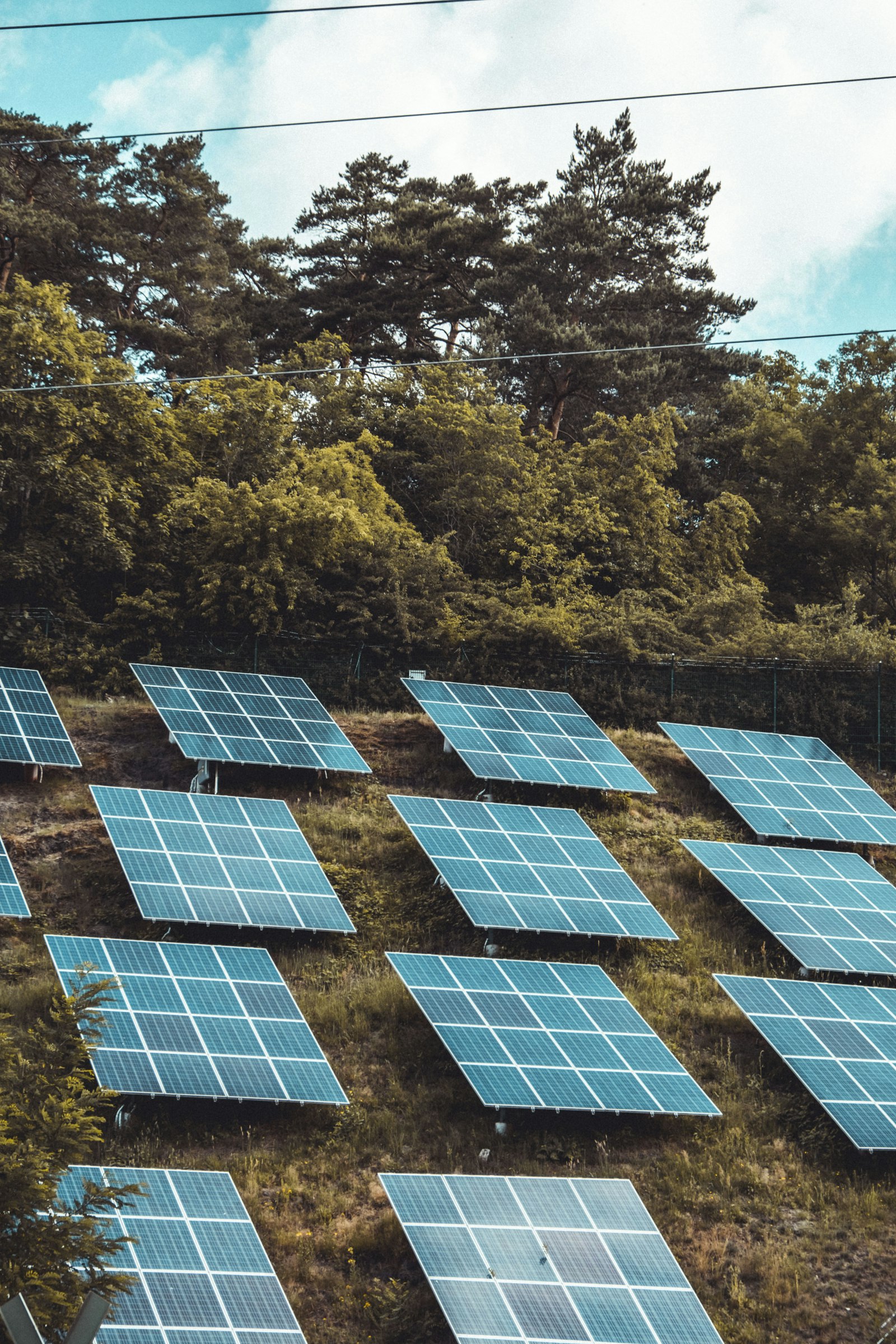
A PERC solar cell is a crystalline silicon cell with a passivated emitter and a passivated rear. The name is the design. A 2020 numerical study in the Journal of Semiconductors describes it as the cell first proposed in 1989, in which the full-area aluminum back surface of an older cell is replaced by a dielectric passivation stack, typically aluminum oxide and silicon nitride, and the metal touches the silicon only at local openings. The older full-area aluminum contact is the aluminum back-surface field, or Al-BSF. PERC keeps that local contact and adds the passivation between the contacts. It is a wafer cell. It is not a thin film, and it is not, by itself, a module nameplate.
What a PERC solar cell changes
The rear of an Al-BSF cell is metal across the whole back. That contact is simple and it also lets carriers recombine at the back surface. The passivation layer in a PERC solar cell reduces that recombination, and the local contacts still collect the current. The 2020 paper’s reading of the factory literature was that, in 2019, the average mass-production efficiency of p-type monocrystalline PERC was around 22 percent, about 1.2 percentage points above the Al-BSF cells in the papers they cite. That is a production-era comparison inside that review, not a 2026 module catalog and not a record.
The same paper notes that LONGi announced a 24.06 percent laboratory result on a commercial-size monocrystalline PERC cell in early 2019, and that little technical detail was public. An announcement is not the same document as an independently confirmed entry in the efficiency tables. Treat 24.06 percent as that paper’s report of an announcement.
Later cell designs, including TOPCon and heterojunction, sit on related wafers and are not PERC. Xcel Energy’s 2023 buying rules list PERC, TOPCon, and heterojunction as separate crystalline variations the datasheet has to describe. A quote that says only “mono PERC” has not told you the temperature coefficients, the bifacial coefficient if the module is bifacial, or the maximum system voltage. Those lines are what the utility’s spec demands. A homeowner can demand them too. Heterojunction, which uses a crystalline wafer and different layers, is in what heterojunction solar is.
What a PERC solar cell record is not
The solar cell efficiency tables, version 68, published in Joule in 2026, list independently confirmed one-sun results measured under the global AM1.5 spectrum at 1,000 watts per square meter and 25°C. In that issue the small-area silicon p-PERC entry is 25.0 percent plus or minus 0.5 percent, on 4.00 square centimeters designated area, measured at Sandia in March 1999, from UNSW. The large-area p-PERC entry is 24.1 percent plus or minus 0.4 percent, on 441.3 square centimeters total area, measured at ISFH in December 2024, from Trina. Both are cells. Neither is the wattage printed on a module you can buy this year.
The same tables also list higher silicon results that are not p-PERC, including other cell families. A headline about a silicon cell near 28 percent is not a PERC solar cell result unless the row says p-PERC. Read the row. A module result in those tables is still a module measured at 25°C cell temperature, not a hot roof in July. How temperature moves a real module is in how heat affects a solar module.
A bifacial PERC module is a further step. The cell can be built so the rear accepts light, and the module then depends on albedo, height, and row spacing. On one NREL single-axis tracker validation, annual bifacial energy gain was about 6.5 percent for PERC and about 9 percent for silicon heterojunction. That is that array, not a property of the letters PERC. The rear-side page is bifacial solar panels.
Light-induced degradation in a PERC solar cell
The 2020 study treats light-induced degradation as a known PERC issue, and it points to stabilization methods in the literature it cites. Degradation here means the cell’s power can fall after it is first exposed, for reasons that belong to the wafer and the process, not to dirt on the glass. A performance warranty is the contract that deals with power after installation. It is not a measurement that the stabilization worked. Ask whether the module was stabilized before the flash test that set the nameplate, and what the warranty does in the first year, when many contracts allow a larger drop. How to read that contract is in what a solar panel warranty covers.
Do not confuse light-induced degradation with soiling or shade. Soiling washes off. Shade moves with the hour. A string that is low only in the afternoon is a shadow. A fleet that is low against its own flash files, after the glass is clean and the temperature is accounted for, is when degradation belongs in the conversation. Factory electroluminescence and flash data, which Xcel’s spec asks to be retained against serial numbers for the projects it covers, are what make that conversation possible. Testing is the subject of why solar panel testing matters.
Frequently asked questions
Is every monocrystalline panel a PERC solar cell?
No. Monocrystalline means one crystal in the wafer. PERC is a rear-contact and passivation design on a wafer. TOPCon and heterojunction are other designs. The box should say which.
Does a PERC solar cell guarantee 22 percent module efficiency?
No. Around 22 percent was that 2020 paper’s statement about 2019 average mass production of p-type mono PERC cells, a bit above Al-BSF in the papers they cite. A module is a different object, and a 2026 datasheet is a different year. Use the flash number on the module.
Is the 25 percent PERC figure a panel you can buy?
The 25.0 percent entry in the version 68 tables is a 4 square centimeter cell measured in 1999. The 24.1 percent entry is a larger cell measured in 2024. Both are cells at standard test conditions. Ask the seller for the module flash test, not the cell table.
Sources and references
Passivated rear, local contacts, the 1989 origin, the 2019 production comparison, the reported 24.06 percent announcement, and light-induced degradation: Journal of Semiconductors, 2020, numerical study of PERC. Confirmed cell results at 1,000 W/m², AM1.5, 25°C, including Si (p-PERC) 25.0 percent and Si (large p-PERC) 24.1 percent: Green and colleagues, solar cell efficiency tables, version 68, Joule, 2026. Datasheet lines a buyer can require: Xcel Energy, November 2023. Bifacial PERC gain on one validation: NREL field slides.
