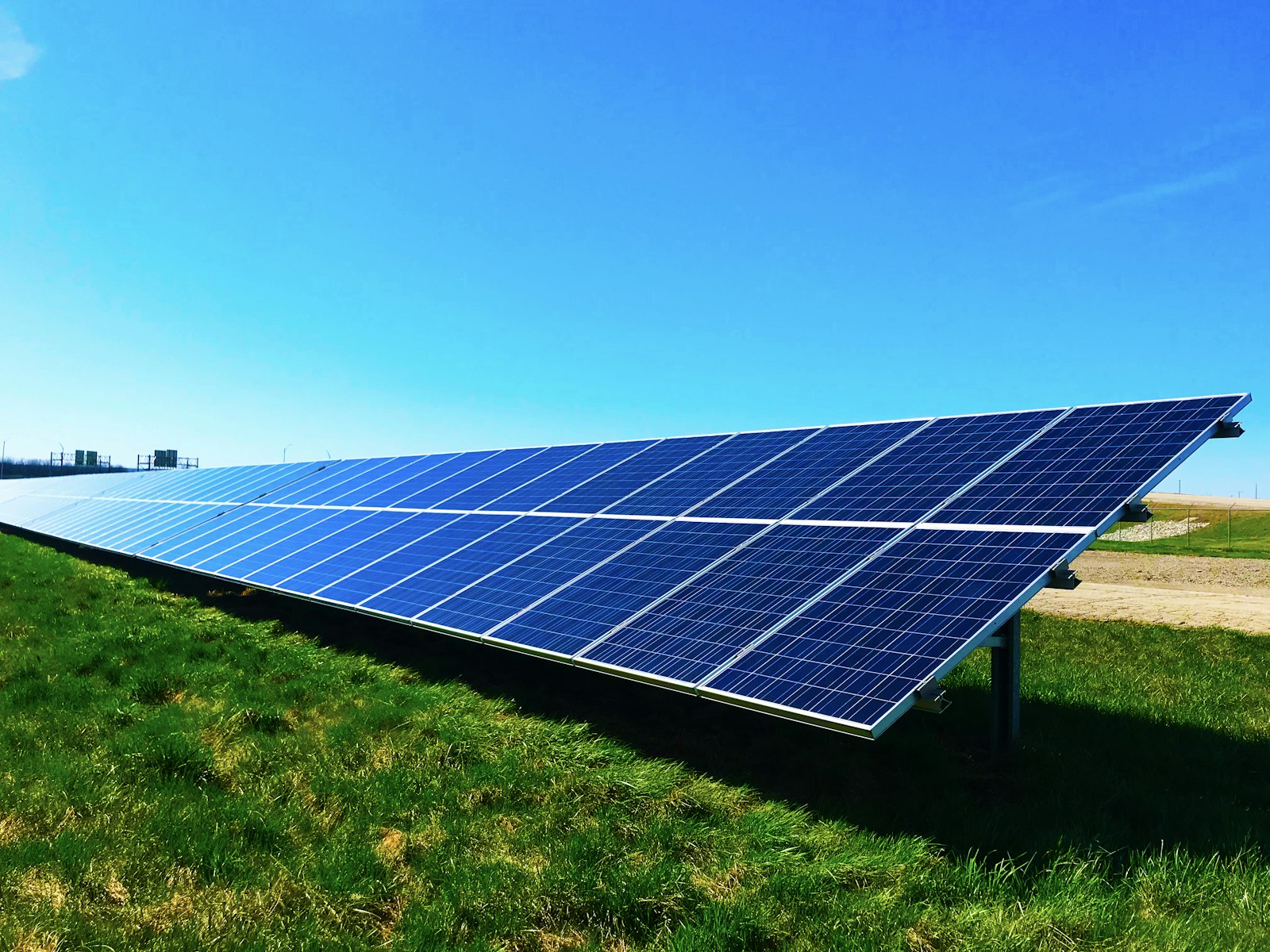
A solar system check is a look at the things that change, done by someone who is allowed to be there, without opening live equipment. Pacific Northwest National Laboratory’s operations guidance is built around that idea. Modules are producing in daylight even when the inverter is off. The shutdown, when it is needed, is the AC disconnect and then the DC disconnect, in that order, by a trained person. A Saturday walk with a phone is not that procedure. It can still catch the faults that do not require a meter: a tree that grew into the array, a penetration that is staining the ceiling, a combiner cover that is open, a ground wire that is off its lug.
The deeper maintenance program, records, and what not to wash on a schedule copied from another climate are in photovoltaic power station maintenance. This list is the walk. It is not a license.
What to look at on the array
From a safe vantage, not from on top of the modules, look for cracked glass, browned cells, a lifted frame, and clamps that are no longer on the module edge. Walking on the glass cracks cells that the walk was supposed to inspect. Soiling is the largest operations issue in PNNL’s account, and it is often hard to see. A uniform film will not look like a bird dropping. Compare production with a recent clean week before you decide the glass is dirty. If it is dirty, the wash methods that stay off the module are in how to clean solar panels. A low-tilt roof in a dry season and a steep roof in a rainy season are not the same decision.
Shade that was not in the original survey is a check item. A new vent, a neighbor’s tree, or grass at the bottom of a ground row changes the string. Shade losses are nonlinear. They are not a fixed percent of nameplate. If only one string is down in the afternoon, write down the hour. That note is more useful than a photo at noon. The mechanism is in how shade affects PV output.
On a ground mount, look at erosion at the piers and at vegetation in the rows. PNNL lists both. On a roof, look at penetrations and at ballast that has shifted. A stain inside the building under a penetration is a leak until someone shows it is not. On a snow site, do not combine this walk with clearing. Coverage and the decision not to climb are in snow on solar panels.
What to look at on the electrical equipment
The inverter should be where the drawing says, with the clearance the manual asks for, and with a display or a log that is actually recording. A red fault that remains after the grid is stable is a work order, not a reboot to try at random. Heat faults often mean the airway is blocked. Fans are a wear part. Do not open the inverter cover to vacuum the board. The fan article, and the limit of what an owner should touch, is solar inverter cooling fan maintenance.
Combiner boxes and disconnects should be closed, labeled, and free of nests and water. A missing cover is an exposed conductor. Leave it and call the person who maintains the plant. Surge devices, if they have an indicator, are worth a glance from outside the enclosure. A spent indicator is a replacement, not a wire to move. Lightning and surge protection are a design, described in lightning protection for a solar array. They are not adjusted during a check walk.
Monitoring is part of the check only if you know what normal is. PNNL notes that insolation can vary about 10 percent either side of average. A day inside that band, with the weather to match, is not a failed string. A day far outside it, with clear glass and a normal inverter temperature, is. What the monitoring system is for, as distinct from the utility meter, is in what a solar monitoring system is.
What a solar system check should write down
| You saw | Write this, then stop |
|---|---|
| Glass film, droppings, or a dirt road upwind | Date, which rows, and whether production moved. Do not walk the modules to wipe them. |
| New shade or tall grass | The hour the shadow hits. Mow only where the design allows you to stand. |
| Stain under a roof penetration, shifted ballast, eroded pier | A photo from a safe place and a call to the installer or the structural contact. Do not lift ballast. |
| Open cover, burned smell, fault that stays on | Leave the covers on. This is no longer a visual check. |
Keep the serial numbers and the as-built drawing with these notes. A warranty claim later needs to know which module and what the production did around the date. The claim itself is a contract, not a photograph. How the contract is structured is in what a solar panel warranty covers.
Frequently asked questions
How often should a solar system be checked?
PNNL does not publish one calendar for every plant. Soiling, access, and vegetation set the pace. A site you can see from the ground can be glanced at when you are there. A roof that needs a lift is a planned visit, not a weekly climb. Production records fill the gap between visits.
Can the owner open the inverter during a check?
No. The visual check stops at the closed cover, the clearance, and the fault log. Internal wiring is for a qualified person with the disconnects open and a procedure. Modules are still live on the roof while the cover is off if the DC side was not correctly isolated.
Is a monitoring login enough of a check?
It catches a dead string and a stuck zero. It misses a stain under a penetration, a nest in a combiner, and a tree that will shade the array next December. Use the login and the walk. Neither replaces the other.
Sources and references
Live modules, shutdown order, soiling, vegetation, erosion, penetrations, access, and the insolation band: Pacific Northwest National Laboratory, solar photovoltaic O&M. Shade as a nonlinear, configuration-specific loss: NREL shade database.
