- What the fan is protecting
- Climate changes the fan’s life more than a slogan does
- Symptoms that justify a shutdown, and symptoms that do not
- How this sits next to the rest of maintenance
- Frequently asked questions
- How often should an inverter cooling fan be cleaned?
- The fan is noisy. Should it be disconnected?
- Do small inverters need this maintenance?
- Sources and references
Maintaining a solar inverter cooling fan means keeping the air path the manufacturer designed, and replacing the fan when that model’s service plan says the bearing or the electronics are due. It does not mean taking the cover off a running inverter. Pacific Northwest National Laboratory’s inverter line is short on purpose: validate production, and clean air-intake filters on the manufacturer’s recommendation, along with fuses and connections on that same timing. The fan is inside that instruction. A universal “every three months” does not appear there, and this article will not add one.
Modules are live in daylight whether or not the fan is spinning. The shutdown PNNL describes, main AC disconnect then main DC disconnect, posted at the inverter, is the start of any work that opens the cabinet. Only trained authorized people connect or disconnect wiring. Looking at a clogged external grille from outside, and writing down that the unit derates every afternoon, is the owner’s or the site technician’s clue. The repair is the qualified person’s.
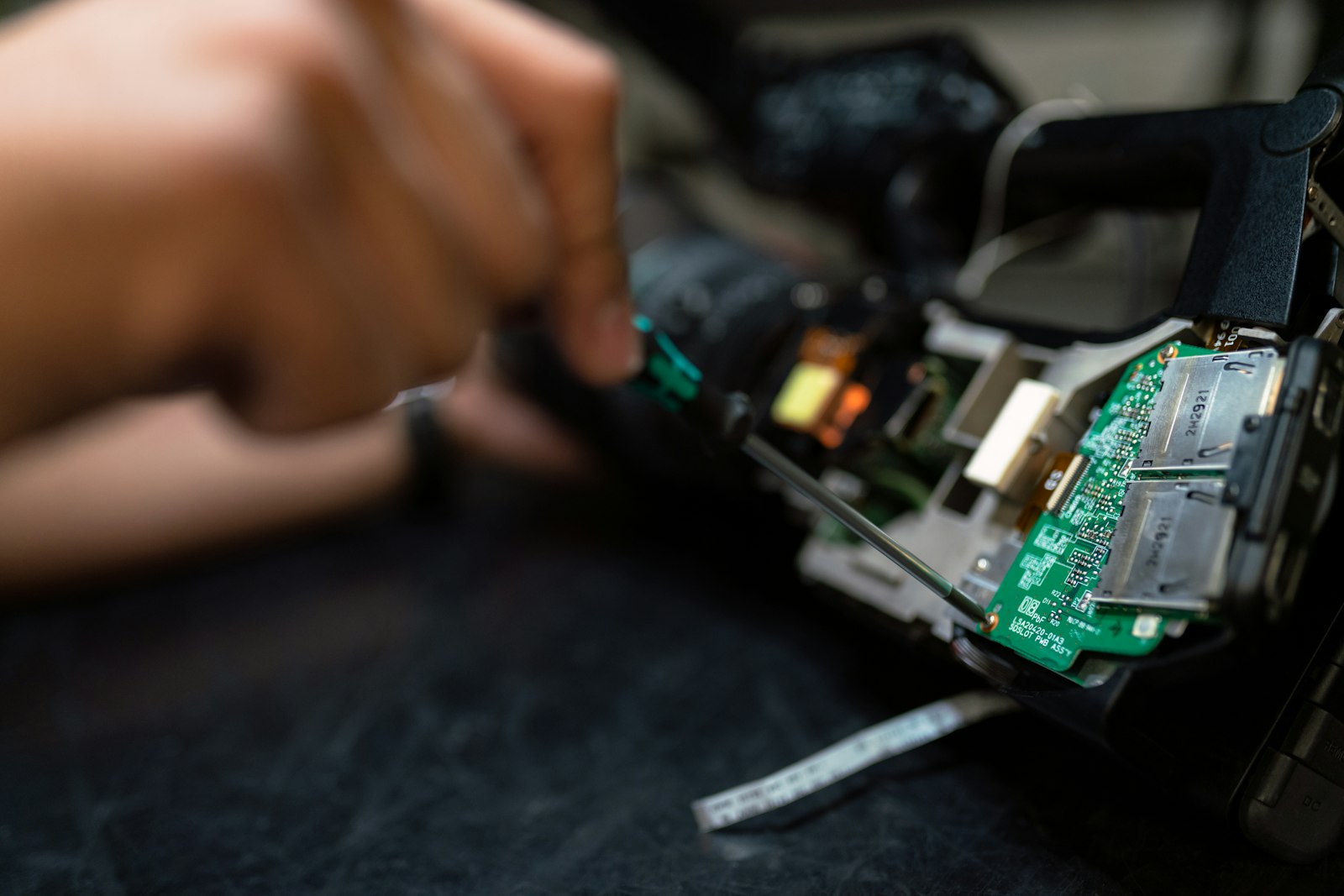
What the fan is protecting
A Sandia and NREL thermal study of operating inverters found component temperatures rising with the power the inverter dissipated, following the day and the year, and changing with wind. Fans and heat sinks exist because that heat is the reliability problem for capacitors, semiconductors, and boards. If the fan stops or the intake plugs, the temperature the study was measuring arrives earlier and stays longer. The inverter may fold back its output. That fold-back is the protection working. Defeating it to recover kilowatt-hours removes the protection and keeps the parts at the damage temperature.
Not every inverter has a fan. A 2017 plant guide described large central cabinets as actively cooled, with fans, filters, and vents that have to be maintained, and described the smaller string inverters of that period as convection-cooled, with the heat sink on an outside wall and no filter. Pacific Northwest National Laboratory’s broader note is compatible: large central units are a different object from small transformerless inverters. If the manual shows no fan, there is nothing to oil. There is still an air path, and blocking it with a wall or a stored pallet has the same thermal result. Confirm which object you have before you order a impeller.
Climate changes the fan’s life more than a slogan does
A reliability assessment aimed at cooling fans, not at the whole inverter, ranked electrical failures driven by temperature and relative humidity as the highest-risk mode in its failure-mode review. It then modeled life for three climates. The 10th-percentile estimates are the study’s, not a warranty. Fans inside the enclosure in a hot-dry profile, Phoenix in that paper, reached on the order of 98 years at the long end of the reported inside-mounted case. Outside-mounted fans in a hot-humid profile, Miami, fell to about 9 years. Internal temperatures in the dry and humid cases were similar. Humidity was the difference that collapsed the life, including a drop from that long dry-case figure to a little over 11 years for inside fans once the humid profile was applied. A cold site sat in between. The model was trained on a real plant and the authors report high agreement with measured temperature and humidity, with more error at the extremes.
Use those numbers only as that comparison. They are not a reason to skip a filter in Phoenix, and they are not a reason to expect a nine-year fan in every coastal city. They are a reason to tell the manufacturer the climate and to ask whether the fan is inside the dry zone of the enclosure or in the weather. A 2013 workshop record adds only that fans and blowers need periodic replacement, and that liquid cooling was seen as economic mainly on large utility inverters. Periodic, in that note, is not a number of months.
Symptoms that justify a shutdown, and symptoms that do not
Afternoon derating on clear, hot days can be the thermal curve with a healthy fan. Compare it with the manual before you replace parts. Derating that begins earlier each month, a fan that is silent when the manual says it should run, or a filter you can see is packed, is the maintenance case. Production that is low all day, including cool mornings, is more likely soiling or a string fault than a fan. PNNL’s roughly 10 percent band on sunlight is the first screen. The split between those symptoms is also the split in inverter problems and what to check first.
Do not vacuum a live intake if the manual forbids it. Do not spray water into a grille. Do not swap a fan of a similar diameter from another product. The reliability study’s whole point is that the motor’s environment, temperature and humidity together, is the stress. A different motor in a different airflow is a different stress, and it may not move the heat the heat sink was built around. After a qualified replacement, confirm that production on a hot afternoon matches the derating curve rather than sitting under it. Write the date in the log PNNL asks for. A warranty claim for a repeat thermal fault is weak without that date.
How this sits next to the rest of maintenance
Filter and fan work is one line of inverter maintenance, not the whole plan. Looking at modules, mounts, and penetrations still matters, and summer dust makes the filter and the glass fail in the same week for different reasons. Washing the array and servicing the fan solve different losses. Both are in the summer discussion at maintaining panels in summer, and the general split between a visual pass and qualified repair is in plant maintenance. Life of the inverter, as opposed to life of the fan, follows the temperature history of the power parts, which is why airflow is also the subject of extending inverter life.
Frequently asked questions
How often should an inverter cooling fan be cleaned?
As often as that manufacturer’s manual says, which is also PNNL’s instruction for intake filters. No universal month count is justified by the sources here. Humid sites in the fan study aged fans faster than dry sites. That raises the importance of the interval. It does not invent a new one.
The fan is noisy. Should it be disconnected?
No. Noise can mean a bearing is due for the qualified replacement the workshop note treats as periodic. Disconnecting it removes cooling while the thermal study’s heat is still being generated. Shut the inverter down properly and have the fan replaced. Do not run with the fan unplugged.
Do small inverters need this maintenance?
Only if they have a fan or a filter. The 2017 guide described many string units of that period as convection cooled. Confirm on the manual. A convection unit still needs its heat sink unobstructed. It does not need a lubrication schedule copied from a central cabinet.
Sources and references
Filters, shutdown, and live modules: Pacific Northwest National Laboratory. Why airflow matters: Thermal study of inverter components. Modeled fan life by climate and mounting: Reliability assessment of cooling fans for PV inverters. Fans as replaceable parts: 2013 thermal-management workshop notes. Which architectures were described as actively cooled in 2017: ICF.
