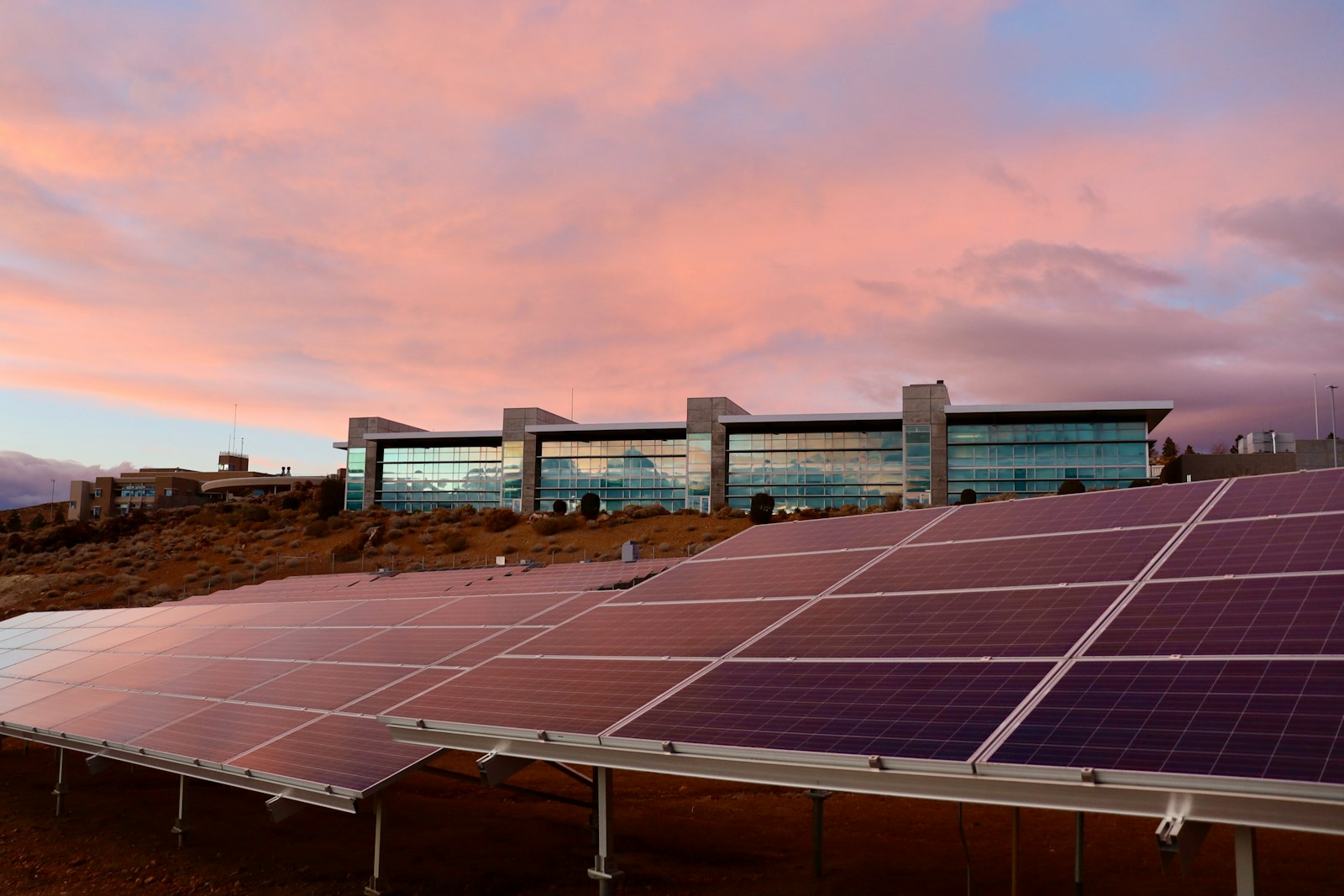
Solar energy storage is worthwhile when the electricity is needed at a different hour from the hour the panels produce it, or when selected circuits must keep running after the grid has gone. It is not worthwhile merely because a roof has space. The US Department of Energy’s grid-modernization description puts the function in one sentence: batteries store excess energy and make it available later. “Later” can be the same building’s evening, or a wider grid that needs the energy after the solar peak. Those are different controls, different interconnection permissions, and often different hardware. A battery that can do one may be contractually forbidden from doing the other.
Chemistry is not this decision. Lithium iron phosphate, nickel manganese cobalt, lead-acid, and the rest change cycle life, weight, and fire behavior, and they are compared in solar battery types. This article is about the job. Buying a chemistry before naming the job is how a household ends up with a battery that cannot island, or a backup system that was never asked to shift a tariff.
The jobs are not interchangeable
Self-consumption is the first job. A building that uses power after sunset exports midday solar and buys the evening back, unless a battery charges from the surplus and discharges into the later load. The Department of Energy’s “later” is exactly that shift. Whether it saves money depends on the prices of the exported hour and the purchased hour. This article does not invent a tariff or a percent saved. If the two prices are similar, the battery’s round-trip loss can erase the point of moving the kilowatt-hour. Ask for the prices and for the battery’s efficiency at the power you will actually use, not for a slogan about independence.
Backup is the second job. An ordinary grid-tied solar inverter, under IEEE Std 1547-2018 as the National Renewable Energy Laboratory primer states it, must stop energizing an island within 2 seconds. The panels go quiet, from the house’s point of view, precisely when the outage starts. Storage provides backup only if the system can disconnect from the utility and keep selected circuits alive. Pacific Northwest National Laboratory’s description of photovoltaic hardware does not include that transfer switch as a default part of “an inverter.” If the quote does not name the circuits and the islanding equipment, the battery is not a backup system. It may still be a self-consumption system. Those are different purchases.
A third job is the one the Department of Energy names for the grid itself: absorbing excess and returning it when the system needs it, which can reduce a peak the utility sees. A customer-owned battery does that only under a program or a setting that allows it. Volunteer assumptions about “supporting the grid” are not a revenue stream. Ride-through and voltage support, which inverters already have to be capable of under the 2018 standard, are inverter functions. They are not a battery.
Power and energy are both the size
Energy, in kilowatt-hours, is how long the job can run. Power, in kilowatts, is what it can run at once. A battery with enough energy for a night of lights can still fail if the well pump’s power exceeds the inverter that couples the battery. Sizing that inverter for an off-grid case is a separate calculation, in off-grid inverter sizing. A grid-tied self-consumption battery uses a different coupling and still has a power limit. Name both numbers from the manuals. Do not accept a single “10 kilowatt-hour” figure as a complete size. This article deliberately does not recommend a universal kilowatt-hour, because the load and the hours are the site’s.
Temperature and throughput decide whether the nameplate energy is available. The thermal work on inverters is a reminder that power electronics derate when they are hot. The battery maker’s own charge and discharge limits, especially in cold weather, are the matching constraint. They are not repeated here as fake universal cutoffs. Read them. A warranty cycle count is a contract, not a measurement that the pack will deliver that many cycles at your depth of discharge. The battery-type article keeps that distinction.
What storage does not fix
It does not fix a shaded array. It does not fix an interconnection that forbids export or forbids islanding. It does not make a grid-tied inverter into an off-grid inverter. It does not clean modules or replace the production log. Pacific Northwest National Laboratory still wants monthly production compared with the expected month, inside a sunlight band of about 10 percent, whether or not a battery is present. A battery can hide a failing string by filling in from the grid or from yesterday’s charge, which is why the solar production has to be logged separately from the battery’s state of charge. That split is why plant monitoring and off-grid monitoring are different instruments.
It also does not inherit the panel’s warranty. PNNL describes typical inverter warranties as about 5 years unless extended, and panel warranties as often longer. Battery warranties are whatever the battery contract says. Putting all three on one “25-year system” slide is how the replacement year disappears from the budget.
A decision order
Name the hour the energy is needed, and the circuits that must survive an outage, if any. If those hours are the solar hours, storage is optional. If they are not, price the shift using the actual tariff and the battery’s efficiency, or design the islanding path for the circuits you listed. Then choose a chemistry that can do that duty, using the battery-type comparison rather than a brand adjective. Then confirm the inverter can form or follow the grid mode you selected. If the sales document skips the hour, the circuits, or the mode, it has not specified a storage system. It has specified a box.
Frequently asked questions
Does every solar installation need a battery?
No. If the load happens while the sun is up, and an outage does not have to be covered, the Department of Energy’s reason for storage, energy needed later, may not apply. A battery then adds cost and loss without a job.
Will a solar battery keep the whole house on in a blackout?
Only if the system was built to island and the circuits were selected. A standard grid-tied inverter stops within 2 seconds of an island under IEEE 1547-2018. Energy capacity alone does not add that switch.
Is the battery type the first choice?
No. The job comes first. Chemistry, cycle life, and the difference between a warranty and a measured life are the next step, in the battery-type article, after the hour and the circuits are named.
Sources and references
Storing energy for later use, including for the grid: US Department of Energy, grid modernization and the smart grid. Why grid-tied solar stops in an outage: NREL/Sandia IEEE 1547-2018 primer. Production checks and typical inverter and panel warranty lengths: Pacific Northwest National Laboratory.
