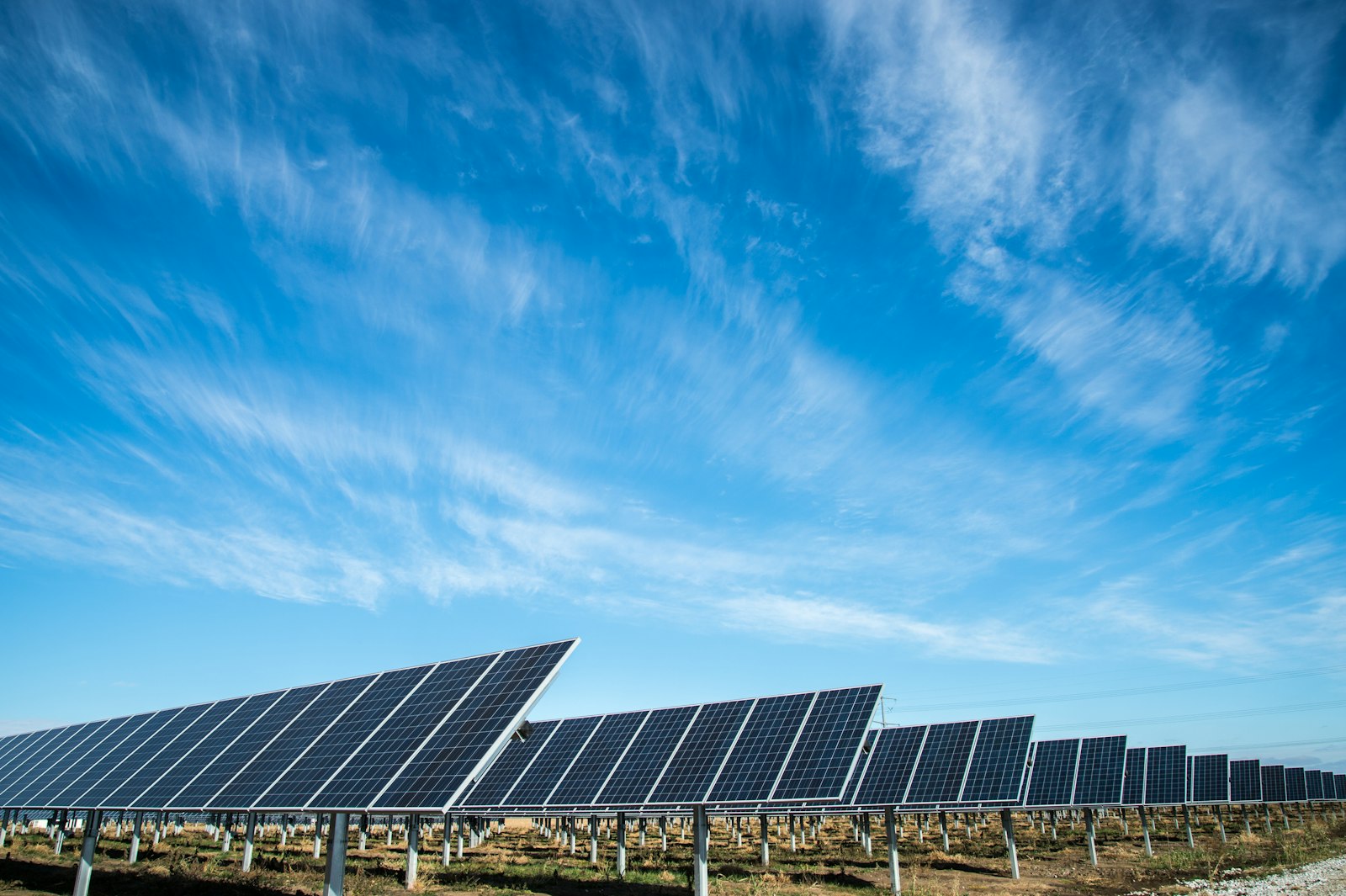
A cadmium telluride solar module uses a thin film of cadmium telluride as the absorber, deposited on glass, instead of a sliced crystalline silicon wafer. It is one family inside thin film. It is not a monocrystalline panel that failed a color test, and it is not something you series with silicon modules because both have cables.
Where it sits among thin-film modules
Thin film is the wider category: a semiconductor layer on a substrate, rather than a wafer cut from an ingot. The category page is what thin-film solar panels are. Cadmium telluride is one absorber inside that category. Amorphous silicon and copper indium gallium selenide are others. A buyer who says “thin film” has not yet said which semiconductor, which voltage, or which end-of-life path.
| Question | Crystalline silicon module | Cadmium telluride module |
|---|---|---|
| What absorbs the light | A silicon wafer | A thin cadmium telluride film on glass |
| What the nameplate still must include | Power, voltage, current, maximum system voltage, coefficients | The same kinds of lines, with that product’s numbers |
| What you must not assume | That a cell record is the module | That a silicon temperature coefficient applies |
| End of life | Frame, glass, cells, as the recycler’s silicon process allows | The manufacturer’s program, when one exists, for this chemistry |
What the sheet still decides
Power, open-circuit voltage, operating voltage, temperature coefficients, and maximum system voltage are read the same way you read any module: off this datasheet, at the conditions it states. A cadmium telluride module can have a different voltage-temperature behavior from the silicon module next to it. Copying a string length from a silicon design onto a telluride design is how a cold morning exceeds an inverter. The cold check itself is in why cold weather raises solar voltage.
Cadmium is a reason the end of life is managed, not a reason to invent a health number for an intact, listed module on a roof. Intact modules are encapsulated. Broken modules are a waste and a handling problem. Recycling and who may take them is in how solar panels are recycled. This page does not quote a leaching study it has not opened, and it does not quote an efficiency crown.
When the comparison is even fair
Compare energy on the same roof, with the same shade and the same weather file, using each module’s own coefficients. Compare price only from quotes. A lower wattage per square meter can still be the right module if the roof, the listing, and the energy model say so. A higher nameplate can still be the wrong module if the string voltage does not fit. The silicon cell most people mean by “a normal panel” is described in what a monocrystalline solar panel is.
Do not series it with silicon because the cables look alike
A cadmium telluride string and a crystalline silicon string have different voltages, different coefficients, and often different connectors. Putting them in one series string is how a cold morning exceeds an inverter, or how a tracker sits at a voltage that suits neither face. Separate inputs, or separate inverters, are the designs that can even be compared. The cold-voltage check stays on the silicon and telluride sheets you actually have, not on a neighbor’s string length.
If a proposal treats thin film as a cheaper silicon substitute, ask for the listing, the take-back path, and the energy model that used this module’s coefficients. Missing any of those three, the comparison is still a brochure.
