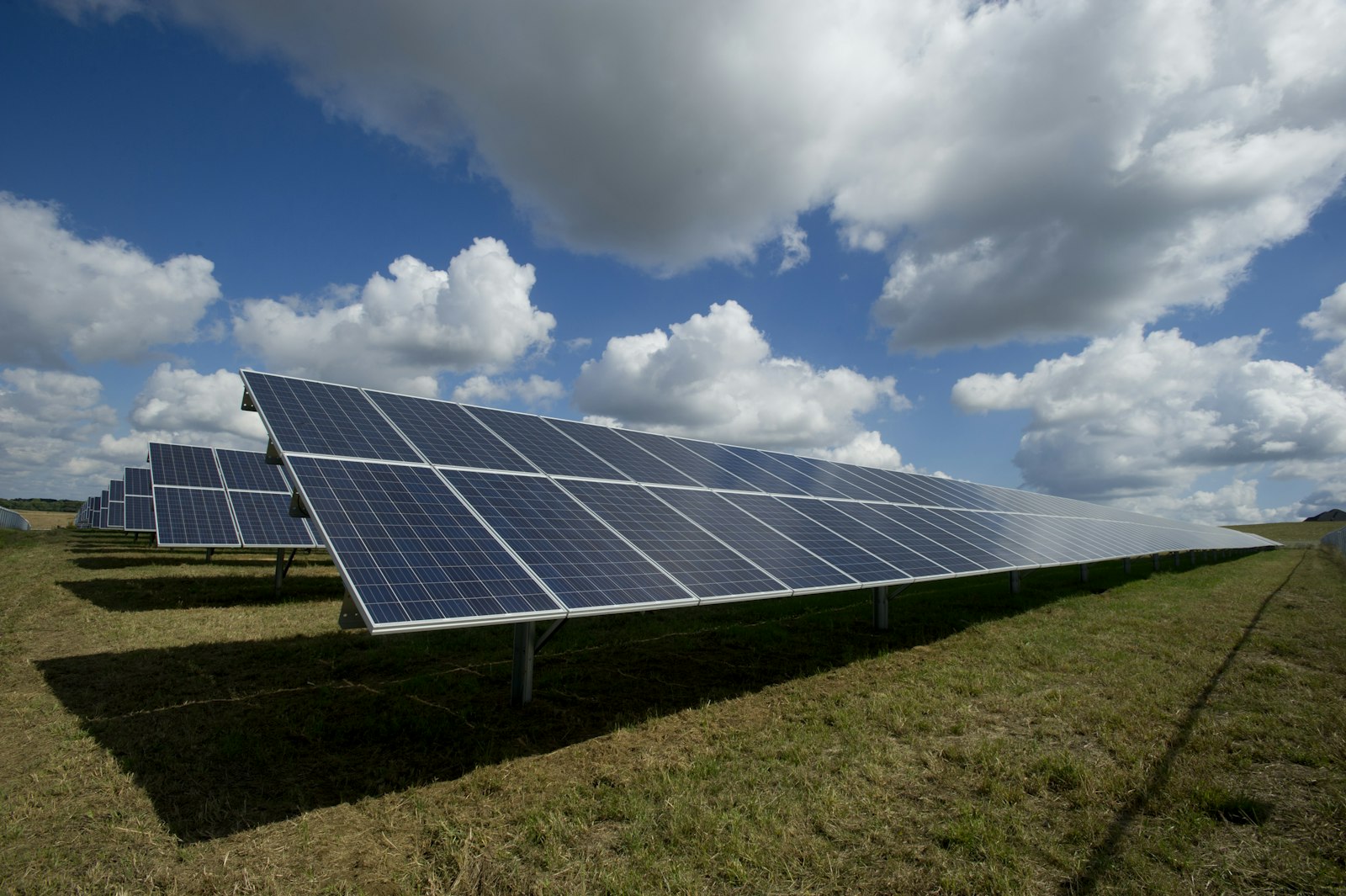
A heterojunction solar cell uses two different semiconductor layers at the junction that separates charge. In the modules sold as HJT, that usually means a crystalline silicon wafer with a very thin amorphous silicon layer on each face. The wafer still does most of the light absorption. The amorphous layers are there to passivate the surfaces and to form the junction. If a datasheet says only “high efficiency” and never says heterojunction, you do not have this structure. You have a slogan.
What the junction is doing
A homojunction keeps the same semiconductor on both sides of the junction and changes the doping. A heterojunction changes the material as well. In an HJT cell the crystalline wafer and the amorphous silicon are different materials, so the interface has to be clean and the amorphous film has to stay thin enough that it does not steal the light the wafer should have absorbed. That is a factory problem. It is not something an installer tunes on the roof.
PERC is a different rear-surface treatment on a crystalline cell. The long account of what PERC changes, and what a cell record does not say about a module, is in what a PERC solar cell is. Putting HJT and PERC in one sentence as “the new efficient kind” erases the only fact the names were for.
What you can check without a lab
| Line on the sheet | What it can tell you |
|---|---|
| Cell or module structure named as HJT or heterojunction | The maker is claiming this stack. Ask which document says so if the brochure and the datasheet disagree. |
| Efficiency and power at standard test conditions | A lab ratio and a nameplate, for that module. Not a promise of annual energy. |
| Temperature coefficients | How voltage and power move when the cell leaves 25°C. HJT is often sold on this line. Use the printed coefficient, not a category percentage. |
| Bifaciality, if the module is bifacial | A rear-side ratio for that build. Site gain is a different question. |
Annual energy still needs weather, tilt, and shade. A low temperature coefficient does not cancel a shadowed string. How heat shows up in the afternoon is in how heat affects a solar module. How long any of these names last in the field is in how long solar panels last.
What the name will not settle
It will not tell you the connector, the maximum system voltage, or whether the module is listed for the array you are building. Those lines sit on the same datasheet and they outrank the cell brand. It will not tell you that every HJT module beats every PERC module. Factories, wafers, and bills of materials differ. Compare two sheets, or compare two flash tests, and stop there.
It will not tell you the degradation rate of the category. A warranty cap is a contract. A literature median is a survey with its own limits, and it lives on the lifespan page, not here. If a seller quotes a cell-record percentage as the module you will receive, ask for the module flash file instead.
