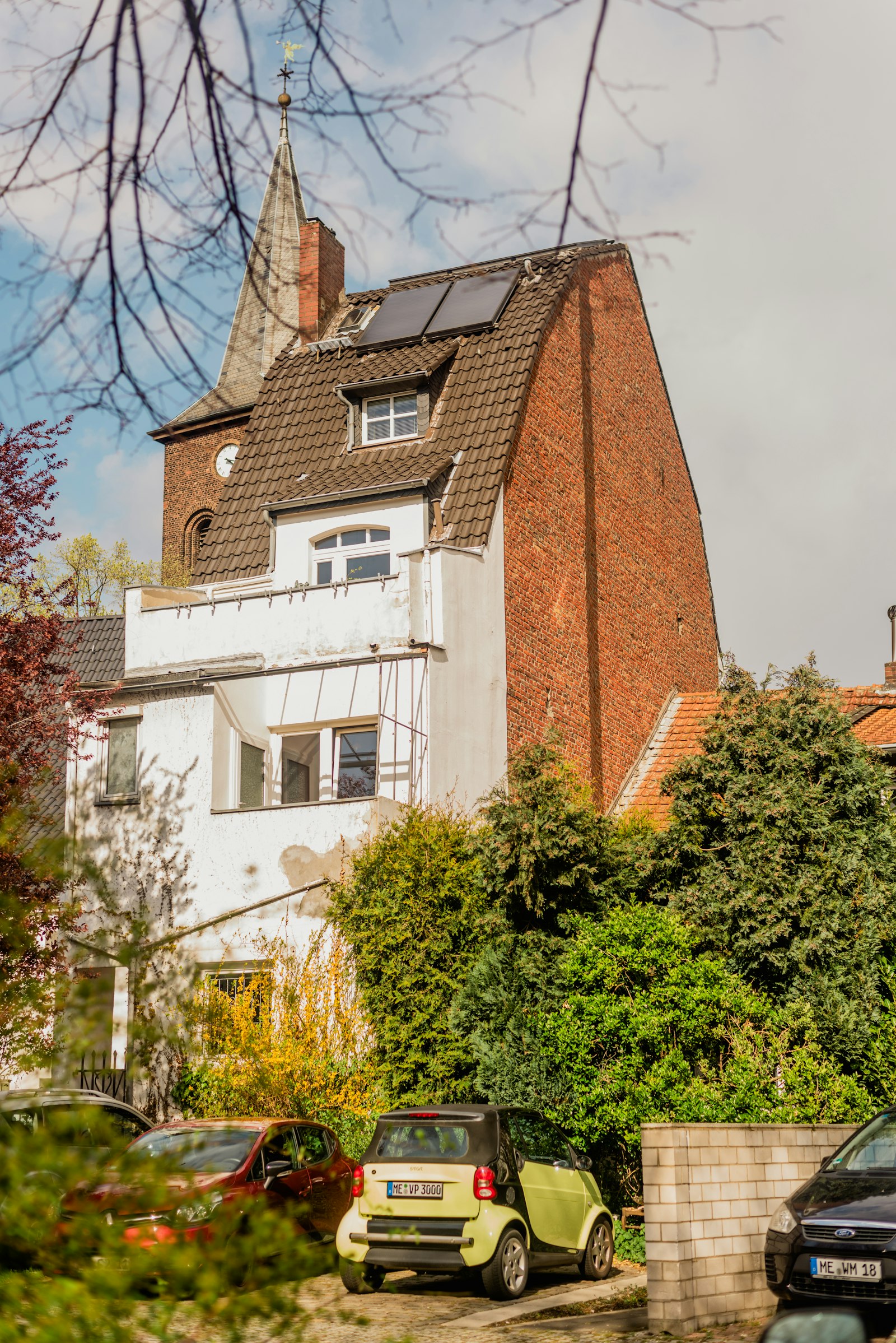
BIPV and BAPV are not two words for a solar roof. Building-integrated photovoltaics are a construction product that also generates electricity. Building-attached, or building-applied, photovoltaics are modules mounted on a building that already has its weather layer. IEA PVPS, reviewing the definitions used in standards, puts the test in one action: if you remove the photovoltaic product, do you have to replace it with another construction product to keep the building working? If yes, it is integrated. If the roof, the wall, or the window still does its job, it is attached.
What BIPV has to provide
EN 50583, as set out in the IEA PVPS definitions report, treats a module as building-integrated when it provides a function under the European Construction Products Regulation. The functions listed include mechanical rigidity or structural integrity, primary weather protection against rain, snow, wind, and hail, energy performance such as shading, daylighting, or thermal insulation, fire protection, noise protection, separation of indoor and outdoor, and security or shelter. Generating electricity is not on that list as a qualifying function. A module that only makes kilowatt-hours, however well, is not integrated.
ISO wording collected in the same report says building-integrated photovoltaics replace conventional building materials in the envelope, with the roof, skylights, and facades as the examples, and that building-attached photovoltaics are simply attached and do not replace those materials. Laminated solar photovoltaic glass, in that ISO draft, is laminated glass that itself generates. The glass product is discussed in what photovoltaic glass is. A framed module with ordinary cover glass, clamped to rails above tiles, is the attached case.
IEC 63092-1, in the IEA categorization report, sorts integrated applications further. Category A is a sloping, roof-integrated module you cannot reach from inside the building. Category E covers external elements such as balcony rails, shutters, and louvers that still perform a building function. A balcony rail that is the guard, and also a module, fails the building if you take the module away and put nothing back. A module on a rack above a roof does not. The categories are a map of products. They are not a style preference.
What BAPV is, and why the distinction is expensive
BAPV is the ordinary rooftop array. The building was weathertight before the modules arrived, and it is weathertight if they are removed, provided the penetrations are made good. Anchors and ballast, access, and soiling on that kind of roof are operations questions, covered in roof-mounted versus ground-mounted solar and in distributed solar on commercial buildings. The electrical rules do not relax because the modules are on a house. They are still live in daylight. The inverter still has to match the service.
The 2024 IEA PVPS standardization report says the practical failure mode out loud. Modules certified as electricity generators are often applied to buildings as BAPV, and they are often not suitable as the building envelope. BIPV has to meet architectural and building-product requirements as well as electrical ones. That is why a BIPV quote is not a module price plus a rail. It includes glass or facade engineering, fire performance, and a replacement path that a pallet of framed modules does not have. A warranty that ships a replacement module and leaves the curtain-wall crew to the owner is a different cost from a warranty on a rack-mounted array. Read who pays for access. Warranty structure is in what a solar panel warranty covers.
Energy yield is usually the attached array’s advantage and the integrated array’s compromise. A rack can be tilted toward the annual sun. A facade is vertical because the wall is vertical. Transparency for daylight is light the cell did not convert. No single percentage captures that trade, and none is invented here. If the project’s purpose is maximum kilowatt-hours on a sound roof, BAPV is the category. If the project’s purpose is a facade that would have been glass or metal anyway, BIPV is the category, and the kilowatt-hours are a second product of a building element.
How to tell BIPV from BAPV on a drawing
| Question | BIPV | BAPV |
|---|---|---|
| If it is removed, what happens? | A construction product has to go back. The building function was in the module. | The roof or wall remains. Penetrations are patched. |
| What is it certified as? | A building component and an electrical generator. | An electrical module on a mount. Often the wrong envelope, per IEA PVPS. |
| What does the energy yield assume? | The orientation the building forced, including vertical glass and any transparency. | The tilt and azimuth the rack was allowed to use. |
Procurement should name the standard the product was tested to, and the building function it claims. A drawing note that says “BIPV” above a rail layout is still BAPV. A drawing note that says “roof array” above a glass roof that is the only weather layer is still BIPV. The words on the title block do not outrank the removal test.
Shade, heat, and soiling still apply to both. A mullion shadow on a facade string is shade. A membrane roof at low tilt is a soiling and a heat problem. Neither is cured by calling the system integrated. Those losses are in how shade affects PV output and how heat affects a solar module.
Frequently asked questions
Is a solar roof tile BIPV or BAPV?
If the tile is the weather layer, and removing it means you must install another weather layer, it is integrated. If the tile sits on top of a roof that is already weathertight, it is attached. The sales name “solar roof” does not decide. The removal test does.
Are BIPV modules more efficient?
Efficiency is not the distinction. Integration is a building function. A facade often produces fewer kilowatt-hours than a tilted rack of the same nameplate, because the orientation and any transparency were chosen for the building. Compare flash tests and then compare orientation.
Can a standard module be used as BIPV?
IEA PVPS says modules certified only as generators are often used as BAPV and are often not suitable as the envelope. Using one as the weather layer is a building-product decision, not a mounting detail. Get the construction certification, or do not call it integrated.
Sources and references
Removal test, EN 50583 functions, and the ISO wording for integrated versus attached glass: IEA PVPS, international definitions of BIPV. IEC 63092-1 categories, including roof-integrated Category A and external elements in Category E: IEA PVPS, categorization of BIPV applications. Why a standard module is often the wrong envelope: IEA PVPS, BIPV standardization, 2024.
