- How roof-mounted solar panels are held down
- How ground-mounted solar panels are built
- Roof-mounted vs ground-mounted solar panels, side by side
- When roof-mounted and ground-mounted solar panels are both wrong
- Frequently asked questions
- Are ground-mounted solar panels always more productive than roof-mounted solar panels?
- Do roof-mounted solar panels damage the roof?
- Is a carport a roof-mounted or a ground-mounted system?
- Sources and references
Roof-mounted solar panels and ground-mounted solar panels make the same electricity from the same kind of module. The difference is the structure under them, how you reach them, and what else that land or roof was doing. Pacific Northwest National Laboratory lists three ordinary places a photovoltaic array sits: on the ground, on a parking canopy, or on a roof. Ground mounts are usually the easiest to walk up to. Roofs are often smaller, because the area runs out and the building has to carry the load. A carport is a third choice when the parking lot is the surface you actually have. It is not a roof and it is not a field.
Neither mount is the default. A roof that cannot be reached, and a field that floods, are both bad sites. The electrical landing still has to exist. PNNL notes that a small array, under about 50 kilowatts in that description, may connect at the building service, while a larger one may need a transformer. The example step-up they give, 480 volts to 15 kilovolts, is an illustration of “larger,” not a rule that every ground mount is a utility plant.
How roof-mounted solar panels are held down
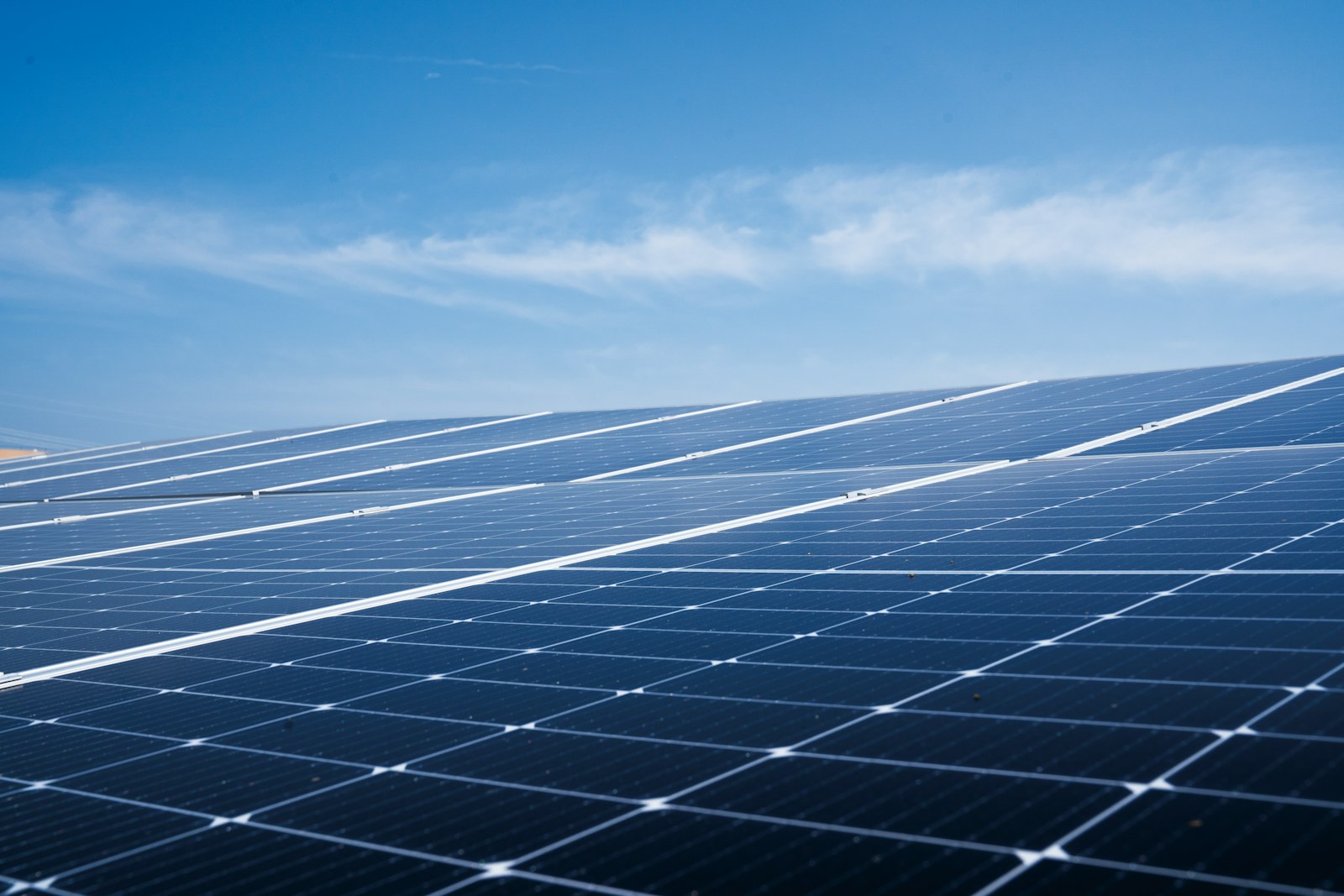
PNNL describes rooftop mounts as typically fixed. They are either anchored into the roof structure or held with ballast sitting on the roof. Anchors make holes. Those penetrations have to stay weatherproof for the life of the array, which is why the laboratory’s inspection list includes the integrity of roof penetrations. Ballast avoids some holes and moves the load into weight the structure must be shown to carry, including wind. A visual check from the ground does not prove either method.
Access is the cost people leave out of the module price. If a technician needs a lift, a harness, and a day when the roof is dry, every filter cleaning and every loose lug costs more than the same task on a ground row. Maintenance cost, PNNL says, varies with how hard the system is to reach. A low commercial roof that ponds water is also a soiling problem. Soiling is called the largest operations issue and is often hard to see. A low-tilt array in a dry climate may need a summer wash every month. A steeper array in a rainy climate may never need one. Flat roofs tend toward the first case.
Shade on a roof is local: vents, parapets, a neighbor’s tree. Modules that share one tracker are pulled down together. That is a string problem, not a reason to abandon the roof. It is a reason to count the obstructions before the layout is frozen. How shade actually cuts output, which is not a fixed percentage, is in how shade affects PV output.
How ground-mounted solar panels are built
Ground-mounted solar panels use foundations below grade or ballast above it, and they can be fixed or set on a tracker. Tracking follows the sun and adds a mechanism with its own maintenance. PNNL’s checklist for ground arrays includes erosion and vegetation. A row that is easy to walk is also easy for weeds to reach. Grass that shades the bottom of a module is an energy loss you can see. Erosion that undermines a pier is a structure problem you notice later.
The ground also decides bifacial value, if the modules are bifacial. For a normal one-sided module, ground-reflected light is typically only about 1 to 2 percent of the irradiance the module sees, so a rough albedo number is enough. For a bifacial module the rear side is the product, and albedo, row spacing, and height decide the gain. A NREL tracker validation reported about 6.5 percent annual bifacial energy gain for PERC modules and about 9 percent for silicon heterojunction on that array. Those are that validation, not a bonus you paste onto every ground mount. A roof usually has less open reflective ground behind the modules, which is one reason bifacial shows up more often in fields than on tight roofs.
Snow sits differently too. A national application of NREL’s snow model found fixed-tilt snow losses from about 0 to 16 percent of annual energy across the continental United States, with some Alaska sites modeled as high as about 40 percent. Tilt helps snow slide. A low-tilt roof holds it. The model treats sliding as the main way snow leaves. It is not an instruction to climb a snowy roof. Clearing is a safety and warranty question, covered in snow on solar panels.
Roof-mounted vs ground-mounted solar panels, side by side
| Question | Roof-mounted solar panels | Ground-mounted solar panels |
|---|---|---|
| What carries the array | The building. Anchors or ballast. Penetrations must stay dry. | Piers or ballast on soil. Erosion and frost are the equivalent risk. |
| Who can reach it | Often a lift or a harness. PNNL ties maintenance cost to that access. | Usually the easiest walk. Vegetation has to be kept off the glass. |
| What the site was already for | A building you needed anyway. Area is limited by the roof. | Land. It is no longer a yard, a crop, or a setback unless the layout allows it. |
| Soiling and snow | Low tilt holds dust and snow. Rain on a steep roof may be enough. | Tilt can be chosen. Trackers and row spacing change both snow and rear light. |
The table is qualitative on purpose. Kilowatt-hours still come from sun, tilt, shade, and temperature, not from the word roof or ground. A shaded roof loses more than an open field of the same modules. An open field with no interconnection loses the project. Modules on either mount stay live in daylight. PNNL’s shutdown order, AC disconnect then DC disconnect, applies to both, and only trained people connect wiring.
When roof-mounted and ground-mounted solar panels are both wrong
If the roof structure fails and the land is a parking lot you cannot give up, a canopy is the mount PNNL already lists. It uses land that is already paved, and it usually costs more steel than a roof or a simple ground rack. That trade is in PV carport advantages and limits. If the only surface is a reservoir, floating solar is a different structure again, with current, ice, and mooring rules, not a ground mount that happens to be wet.
Choose the roof when the building can carry it, penetrations or ballast are acceptable, and someone can maintain it without a heroic visit. Choose the ground when land is available and you want tilt, spacing, and access that a roof will not give. Write the interconnection voltage and the shade before you argue about which looks more serious. A mount that cannot be shut down and inspected is not finished, however good the azimuth is.
Frequently asked questions
Are ground-mounted solar panels always more productive than roof-mounted solar panels?
No. Ground mounts often allow a better tilt and easier cleaning, and they can leave room for rear light on bifacial modules. A clear steep roof can beat a ground array that is shaded, flooded, or poorly tilted. Production is site-specific. PNNL does not rank one mount as higher yielding.
Do roof-mounted solar panels damage the roof?
They can, if anchors leak or ballast exceeds what the structure was shown to carry. PNNL treats penetration integrity as an inspection item. A ballast layout still needs a structural check. The mount method is part of the design, not a detail after the modules are chosen.
Is a carport a roof-mounted or a ground-mounted system?
Neither, in PNNL’s list. It is a canopy over parking, typically fixed. It uses land that is already a car park, and the structure is heavier than a simple roof attachment. Treat it as its own mount.
Sources and references
Mount types, access, penetrations, soiling examples, and the service-size note: Pacific Northwest National Laboratory, solar photovoltaic O&M. Why albedo matters more for bifacial modules, and the 1 to 2 percent ground-reflected share for one-sided modules: NREL albedo data for bifacial PV. Tracker bifacial gains of about 6.5 and 9 percent on that validation: NREL bifacial field results. Modeled US snow-loss range: NREL snow-coverage model in SAM.
