An IP rating on an inverter is a two-digit code, in the style of IEC 60529, that describes the enclosure. The first digit is the degree of protection against solid objects, including dust. The second digit is the degree of protection against water. The letters IP and the two digits are a claim about that enclosure in a defined test. They are not a promise that the inverter may be installed anywhere, and they say nothing about heat, corrosion, or ultraviolet aging of the plastic.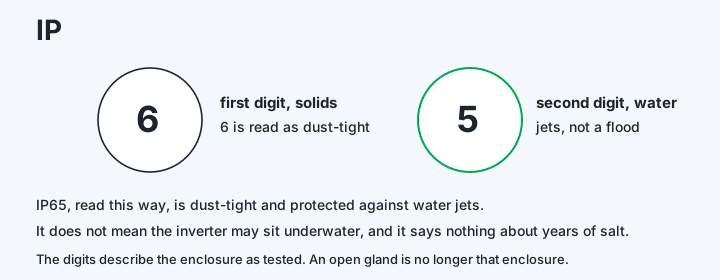
How to read the two digits
A higher first digit is a tighter defense against solids. The top of that scale, the digit 6, is dust-tight: the test does not allow dust to enter in a quantity that would interfere with operation. A 5 on that first digit is a looser dust claim, and the exact test is the standard's, not a slogan on a carton. The second digit climbs through dripping water, spraying water, splashing water, and jets. A second digit of 5 is water jets. A second digit of 6 is more powerful jets. Immersion sits at still higher second digits, under tests that specify a depth and a time.
IP65, the code people meet most often on outdoor inverters, joins those two statements. The 6 says dust-tight. The 5 says water jets. Together they describe an enclosure that has passed those tests. They do not describe an enclosure that may be submerged, left in a flood, or washed with a closer and harder jet than the test used. A unit marked IP65 can still be the wrong unit for a pit, a coastal spray the manufacturer excludes, or a roof with no shade, because water and dust were never the only stresses.
Some labels add extra letters after the digits. Those letters modify the code, and the datasheet has to explain them. If the label is worn, photograph it and match it to the manual for that serial range. A family name on a brochure can hide a cost-reduced enclosure with a lower code. The code that counts is the one on the unit you are about to mount.
The rating is the box as it is installed
The laboratory tests a complete enclosure: lid screws at the stated torque, gaskets seated, cable glands assembled the way the instructions show. An open knockout, a gland tightened by hand onto the wrong cable diameter, or a lid bent by a previous service call is a hole the test did not include. The installed rating is the nameplate only when the manual's sealing steps were followed. Outdoor placement, shade, and airflow still have to satisfy the thermal rules, which are a different chapter, discussed in where to mount a solar inverter.
An indoor code on an inverter that someone has sheltered under a small awning is still an indoor code, unless the manual explicitly allows that shelter as an outdoor installation. Driving rain blows sideways. Condensation forms inside a box that breathes through an unsealed conduit. Conduit entries need the fittings the manual names, and any drain or vent the manufacturer provided has to stay as they designed it. Sealing a deliberate vent because it looked like a leak path can cook the inverter. Opening a gland to listen for the fan, and leaving it open, gives up the code for the rest of the season.
Frequently asked questions
Does IP65 mean the inverter can be pressure-washed?
IP65 includes water jets as IEC 60529 defines that test. A closer nozzle, a higher pressure, a solvent, or a spray aimed into an open gland is a harsher exposure than that sentence. Follow the cleaning words in the manual. If the manual is silent, leave washing to a qualified person and keep water off the seals.
If the nameplate says IP65, is the installation outdoor-ready?
The nameplate describes the enclosure in the condition the test used. Glands, unused openings, and the lid have to be finished as the manual shows. Heat, sun, and the required clearances are separate limits. An IP65 inverter in a sealed cabinet can still derate itself into a fault.
