- Residential PV inverter
- Commercial PV inverter
- Utility-scale PV inverter
- PV inverter checks at every size
- Where ShineTong fits
- Frequently asked questions
- Which PV inverter should a house use?
- Is a hybrid inverter always the better residential choice?
- How is a commercial PV inverter different from a utility inverter?
- What should I check on the datasheet before ordering?
- Does ShineTong supply commercial or utility inverters?
- Sources
Pick the PV inverter from the project, not from a kilowatt sticker. A house usually needs a string inverter, a microinverter, or a hybrid. A commercial building needs a three-phase inverter that fits the service, the demand, and the utility’s export rules. A utility plant needs a large string or central inverter that passes that grid operator’s connection conditions, often on a 1,500 V DC array. The same nameplate watts can be the wrong machine in all three places.
An inverter takes DC from the modules and makes AC the building or the grid can use. If it is off, the array produces nothing the loads can take. The Victorian solar buyers’ guide says panels are expected to last more than 25 years, while a grid inverter is often not expected to last much past 10 or 15, so a system commonly replaces the inverter at least once. That is a planning fact for ordinary grid inverters. It is not a warranty, and it is not true of every product.
Residential PV inverter
Start with the roof and the grid, in that order.
A simple roof, one orientation, little shade, and a stable grid points to a string inverter. Modules share one or more trackers. Shade does not automatically switch off the whole string: bypass diodes route around the shaded groups. It can still pull that string down, which is why a roof with several directions or a chimney across the array is a poor fit. Panel-level hardware, a microinverter or a DC optimiser on a string inverter, keeps each module on its own tracker. Micros also make it easier to add a panel later, because the new panel brings its own inverter. The comparison is written out in string inverter versus microinverter.
Then the battery. If the only goal is a lower bill and the grid is reliable, a normal grid-tied inverter is the smaller machine. It stops in a blackout. If the house must keep selected circuits on, or store midday solar for the evening, look at a hybrid, or at a battery that has its own inverter and couples on the AC side. “Hybrid” does not mean every model backs up the whole house or speaks to every battery. Get the battery list and the backup power in writing. If there is no usable grid, the product is an off-grid inverter-charger, which is a different box from a grid-tied string inverter. Those choices are in hybrid versus a normal inverter and hybrid versus off-grid.
Match the service. Many houses are single-phase. Larger homes are three-phase. The inverter has to be the same voltage and frequency as that service, not a neighbouring country’s. Size it against the array and the loads you actually run together, including motors, not against a monthly kilowatt-hour total. If more panels may be added, or an EV charger, leave headroom or choose hardware that can grow. Ask who pays labour when the warranty is used. Years on a brochure and a truck roll are different promises.
Commercial PV inverter
A shop, a warehouse, or a school is not a large house. The inverter has to follow the building’s demand, not only the annual energy bill. Pull interval data if it exists. Separate the steady load from short surges of motors, compressors, and pumps. Separate circuits that must stay on in an outage from circuits that can drop. Monthly kilowatt-hours do not answer those questions.
Commercial services are three-phase. Confirm voltage, frequency, and how much the utility will allow you to export. A self-consumption project, a zero-export project, and a project paid for exported energy are three different control settings. A hybrid can charge a battery and shave a peak, but only the model whose datasheet lists those functions. Backup runtime, transfer behaviour, and which board is critical all have to be decided before the inverter is named.
Then the array. More than one roof face, or a plant room full of shade from equipment, needs enough MPPTs, or module-level hardware. The DC side still has to fit: maximum voltage, the voltage window where the tracker actually works, input current against the modules’ short-circuit current, and how many strings may land on one input. An enclosure rating matters on a roof or in a dusty yard. Communications matter if the site already has a building manager or a monitoring contract. Failure on any of those is a reason to drop the candidate, not a reason to like its efficiency number.
Utility-scale PV inverter
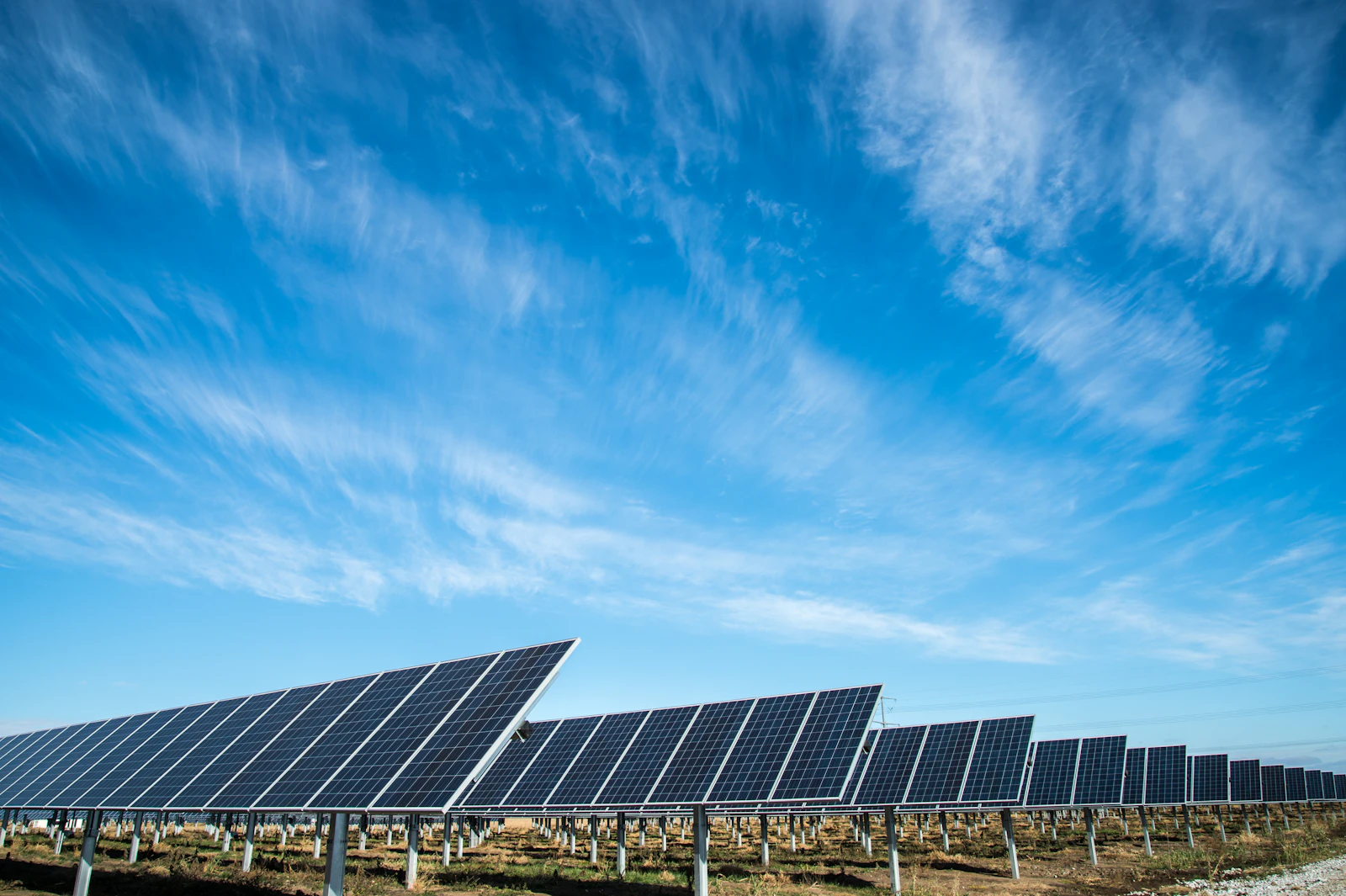
Utility selection is a connection problem first. Write down DC capacity, allowed export, whether the point of connection is low voltage or medium voltage, the transformer, maximum DC voltage, the string design, and the site (heat, altitude, dust, corrosion). Then write down what the grid operator already requires: fault behaviour, reactive power, power factor, curtailment, and remote control. An inverter with a strong efficiency claim and no certificate for that grid code does not get a second round.
The hardware class is a large string inverter or a central inverter, commonly on 1,500 V DC arrays, with the AC side matched to the plant transformer. The same pass-fail list used on a commercial roof still applies, at plant scale: DC voltage and current, number of strings, AC voltage, enclosure, surge protection, and a service plan that can actually reach the site. Add the plant controller and SCADA. A unit that cannot take the setpoints the operator sends is not connected, however large it is.
Clipping belongs in this conversation. Designers often install more module watts than the inverter’s AC rating, so the inverter flattens the best hours and works nearer its rating the rest of the day. There is no universal ratio. Ask for the ratio used on this plant and for an estimate of the energy clipped. Do not treat a higher ratio as free energy, or a lower one as caution, until that estimate is on the table.
Grid-forming, the ability to help hold voltage and frequency rather than only follow the grid, is still mostly a storage-inverter question in 2026. Do not assume a PV-only inverter does it because a brochure uses the words. If the specification requires it, the certificate has to say so for that model.
PV inverter checks at every size
Use the same short list on a house, a warehouse, and a plant. Drop any unit that fails one line.
- Maximum DC voltage, including cold weather, inside the inverter’s limit.
- MPPT window wide enough for the string on a hot afternoon, not only at noon in the lab.
- Input current at least the module short-circuit current, per tracker.
- AC voltage, phase, and frequency equal to the service.
- A grid certificate for the country and the code the utility enforces.
- Enclosure and temperature range for where it will actually be bolted.
- A named service party, spare strategy, and a warranty that states who pays labour.
Efficiency is the last comparison, and only between units that passed. A fraction of a percent is smaller than shade, a wrong roof face, or an inverter that is down for a month. How the conversion works is in how solar inverters work. Brand lists, which are a different job from this choice, are in the residential and on-grid manufacturer notes.
Where ShineTong fits
ShineTong builds microinverters, not string inverters, hybrid inverters, off-grid inverter-chargers, or utility central inverters. If the project is a simple unshaded roof, a three-phase commercial plant, or a medium-voltage solar farm, we are the wrong manufacturer for the main inverter, and the sections above are the way to choose someone else.
Where the roof is shaded, split, or meant to grow a panel at a time, the published range is:
- ST-500M: one module, rated AC output 500 W or 600 W, maximum DC input 60 V, maximum input current 14 A, AC 220–240 V, IP67, operating temperature −40°C to 65°C.
- ST-1200D: two modules, rated AC output 800–1,600 W, maximum DC input 60 V, maximum input current 16 A, AC 220–240 V, IP67, −40°C to 65°C.
- ST-2800Q: four modules, rated AC output 2,000–2,800 W, maximum DC input 60 V, maximum input current 20 A, AC 220–240 V, IP67, −40°C to 70°C. The published maximum CEC efficiency for this series is 97.5%.
The product page states a 25-year warranty on these series. Input current still has to clear the panel’s short-circuit current, and the AC output on this table is 220–240 V, so a 120 V service needs a different confirmation before anyone assumes these models fit. Grid approval is for the destination named on the order, not a blanket claim for every country. We do not publish a price list.
Send the project type and the grid
Frequently asked questions
Which PV inverter should a house use?
A string inverter on a simple, lightly shaded roof with a reliable grid. A microinverter or optimizers when the roof faces several ways, is shaded, or will grow later. A hybrid, or a battery with its own inverter, when you need storage or backup. An off-grid inverter-charger when there is no grid to follow. Match single-phase or three-phase to the service.
Is a hybrid inverter always the better residential choice?
No. If you will not install a battery and you do not need power during an outage, a hybrid is extra hardware. A normal grid-tied inverter is the match for a bill-reduction system on a stable grid, and it shuts down when the grid does. Read the backup rating and the battery list before you pay for a hybrid.
How is a commercial PV inverter different from a utility inverter?
A commercial inverter ties into a building’s three-phase service and has to follow that site’s demand, export limit, and roof layout. A utility inverter ties into a generation plant, often at 1,500 V DC and through a transformer, and has to meet the grid operator’s reactive-power, protection, and control rules. Both fail if the certificate or the DC window is wrong. They are not sized by copying a residential rule onto a larger number.
What should I check on the datasheet before ordering?
Maximum DC voltage, MPPT window, input current versus the module short-circuit current, AC voltage and phase, the grid certificate for your country, the enclosure, and the warranty labour terms. Compare efficiency only after those match. Ask for the DC-to-AC ratio and the clipped energy if the array is larger than the inverter rating.
Does ShineTong supply commercial or utility inverters?
No. ShineTong supplies microinverters in the ST-500M, ST-1200D, and ST-2800Q series for panel-level conversion. We do not build string inverters, hybrids, off-grid inverter-chargers, or central utility inverters. For those, use the checks in this guide and a manufacturer that actually makes that class.
